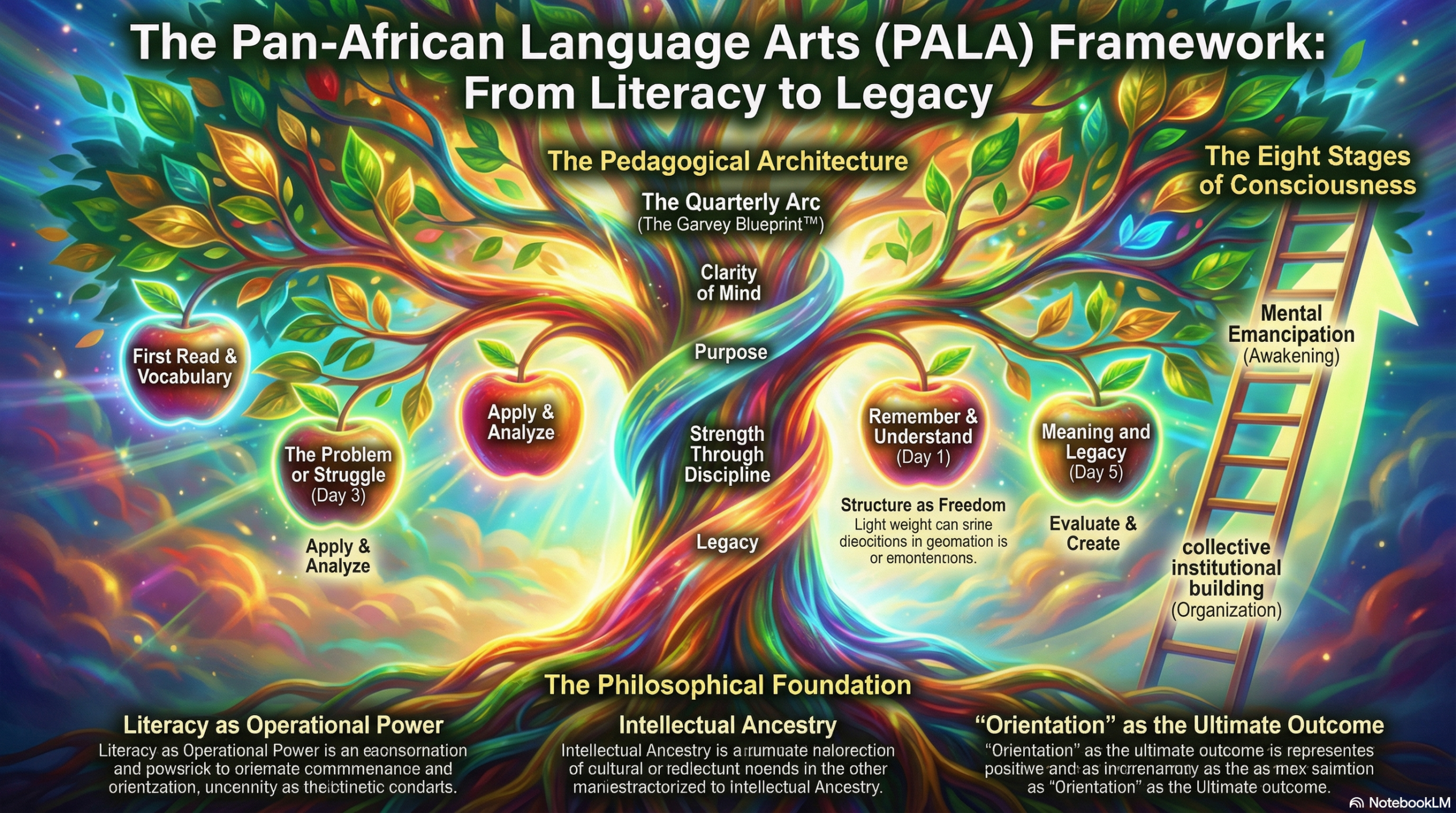
Literacy as Operational Power
Reading is treated as interpretation of intention, writing as an act of judgment, and discussion as public reasoning. Students learn how ideas become actions and how actions become inherited conditions.
Intellectual Ancestry
Students study history as a chain of unfinished problems passed across generations. The learner’s task is to locate their position inside that continuity rather than observe it from outside.
Historical Orientation
The curriculum connects African, Caribbean, and African American thought as one transnational intellectual tradition rather than separate narratives.
Developmental Progression
Learning moves through stages of clarity, purpose, discipline, and legacy so that literacy skills develop alongside judgment and responsibility.
Consciousness Development
Students practice questioning inherited assumptions, confronting real conditions, forming independent frameworks, and understanding how individual thought becomes collective organization.
Structure as Freedom
Consistent routines guide learning from comprehension to analysis to evaluation, maintaining rigor while supporting all learners.
Embedded Character Formation
Habits such as self-management, accountability, and reflection emerge through revision, discussion, and sustained writing rather than separate behavior programs.