Category: Homeschooling and Charters

  • Mia Mottley Just Made History Again. Your Students Should Know Her Name.

    Mia Mottley Just Made History Again. Your Students Should Know Her Name.

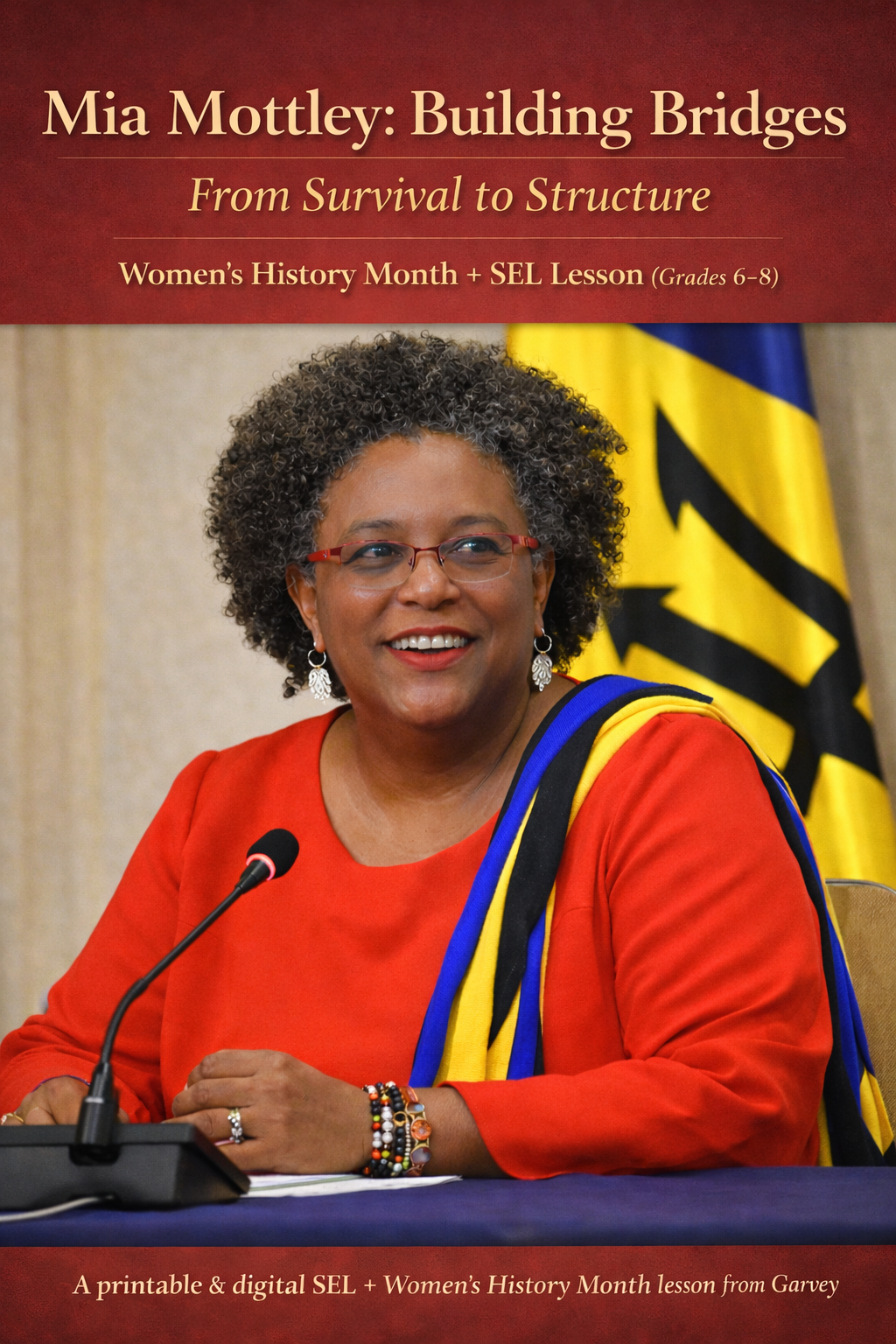
    On February 11, Barbados Prime Minister Mia Mottley won a historic third consecutive term, her party sweeping all 30 seats for the third time. She is the longest-serving female head of state in the world. And most students have never heard of her.

    Three days ago, the people of Barbados gave Mia Amor Mottley a mandate that no other Caribbean leader of her generation has received. The Barbados Labour Party captured every seat in the House of Assembly for the third consecutive election. No opposition member holds a single seat. The margin is not close. The margin is total.

    Mottley stood before her country and said what she has said since 2018: “We did not come simply to hold office. We have come to make Barbados better, and to make your lives better.”

    That sentence carries weight because Mottley has spent the years between elections proving she means it. She led Barbados from a constitutional monarchy to a republic. She stood at COP26 in Glasgow and told world leaders that two degrees of warming was a death sentence for island nations. She launched the Bridgetown Initiative, a plan to restructure how wealthy nations loan money to countries hit by climate disasters. She did not beg. She proposed mechanisms. She built coalitions with nations across Africa, the Pacific, and Latin America.

    And now her name is circulating as a leading candidate to become the next Secretary-General of the United Nations.

    Why This Matters for Your Classroom

    Women’s History Month is two weeks away. Teachers across the country are planning lessons right now. Most of those lessons will cover the same names they covered last year and the year before. Harriet Tubman. Rosa Parks. Susan B. Anthony. Important women. But a curriculum that only teaches students about leaders from the past teaches them that leadership is something that already happened.

    Mia Mottley is making history in real time. She is not in a textbook. She is in the news this week. When students learn about Mottley, they encounter a living leader who shows them that small nations produce world-changing voices, that coalition-building is a practical skill, and that placing truth on record is both an act of courage and a strategy.

    The connection to the Pan-African tradition runs deep. Barbados is the same soil that produced Shirley Chisholm, whose mother came from the island, whose grandmother taught her she was somebody. Chisholm carried Barbados in her voice. Mottley carries it in her strategy. The line runs unbroken.

    A Lesson Ready to Teach

    We built the Mia Mottley lesson for exactly this kind of moment. “Building Bridges From Survival to Structure” gives students a focused biography, vocabulary tied to climate finance and international leadership, evidence-based comprehension questions, 10 SEL reflection prompts, a graphic organizer, and a systems-thinking extension activity that moves students from biography to understanding how power actually works.

    The lesson connects to CASEL SEL Competencies in Social Awareness and Responsible Decision-Making. It aligns with Common Core ELA standards for citing evidence, determining central ideas, and writing routinely for reflection. It works for whole-group instruction, small-group work, independent study, or emergency sub plans. Everything is in the packet. No prep required.

    Mia Mottley: Building Bridges From Survival to Structure

    A complete SEL + Women’s History Month lesson for grades 6–8. Teacher guide, student biography, vocabulary, comprehension questions, SEL reflections, graphic organizer, quiz with answer key, and extension activity.

    Get This Lesson — $4.75: https://www.teacherspayteachers.com/Product/Mia-Mottley-Womens-History-Month-SEL-Lesson-Grades-68-15367954

    The Full Collection

    Mia Mottley is one voice in a larger tradition. Our Women’s History Month Bundle includes eight complete lesson packets covering Ella Baker, Harriet Tubman, Sojourner Truth, Ida B. Wells, Fannie Lou Hamer, Septima Clark, Shirley Chisholm, and Miriam Makeba. Each lesson follows the same structure: biography, vocabulary, comprehension questions, SEL reflection, graphic organizer, and quiz. Together, they give students a month-long look at women who built movements, not monuments.

    Add the Mia Mottley lesson to the bundle, and your students will meet nine women across two centuries of leadership. From the Underground Railroad to the United Nations stage. From speaking truth with nothing to speaking truth with a nation behind you.

    Women’s History Month Bundle: 8 SEL Lessons

    Eight complete lesson packets. Grades 6–8. Print and digital. $35.99 (save 25%).

    Get the Bundle — $35.99: https://thegarveyclassroom.com/womens-history-month-curriculum/

    Mottley said it plainly in her victory speech: “Our mission first and foremost is to stop poor people from being poor and to remove injustice wherever it exists to create opportunities for people.” That sentence could spark a class discussion that lasts the entire period. It could anchor a writing prompt. It could change how a student thinks about what leadership looks like.

    She won three days ago. Women’s History Month starts in two weeks. The timing is yours.

    FAQ

    Who is Mia Mottley?

    Mia Amor Mottley is the first female Prime Minister of Barbados, first elected in 2018. She won a historic third consecutive term on February 11, 2026, with her Barbados Labour Party sweeping all 30 parliamentary seats. She is the longest-serving female head of state in the world and a leading global voice for climate justice and debt reform for vulnerable nations.

    Why should I teach Mia Mottley during Women’s History Month?

    Mia Mottley is a living leader making history in real time. She gives students a model of Caribbean women in global leadership, coalition-building as a practical skill, and truth-telling as strategy. Her story connects to Shirley Chisholm’s Barbadian heritage, climate justice, and responsible decision-making, all aligned to CASEL SEL competencies and Common Core ELA standards for grades 6 through 8.

    What is included in the Mia Mottley lesson plan?

    The lesson includes a teacher guide with pacing and differentiation strategies, a student biography written at 6th-grade reading level, five vocabulary terms tied to climate finance and international leadership, ten comprehension questions, ten SEL reflection prompts, a graphic organizer, a multiple-choice quiz with answer key, and a systems-thinking extension activity. It works for whole-group instruction, small groups, independent study, or emergency sub plans. No prep required.
  • The Garvey Classroom Resources

    The Garvey Classroom Resources

    The Garvey Classroom was created to give our children the tools to become confident, lifelong learners.

    We build resources that help African children in the West remember who they are, trust their minds, and walk with purpose.

    Parents, teachers, and community elders will find tools here that strengthen identity, clarity, and belonging in our children.

    Start Here

    For parents

    Begin with the children’s books and short videos. These stories and daily teachings help your child grow a strong mind and a grounded sense of self.

    For educators

    Use our lesson plans, ROOTS reflections, and writing guides. These resources help you create classrooms that protect imagination and build confidence.

    For community leaders

    Use our stories and study circles to support youth programs, church groups, and after school spaces.

    Books for Home and Classroom

    Amazon Author Page

    https://www.amazon.com/stores/author/B001K819L0

    For Parents and Children

    My Name Is Marcus

    • Amy’s Christmas Gift

    • The Marcus Garvey Coloring Book 

    For Teens and Adults

    The Power of the Mind, Purpose, and Perseverance: A Marcus Garvey Reader

    Unstoppable You: Fifty Quotes from Marcus Garvey to Inspire Greatness

    All titles are available from the Amazon author page: https://www.amazon.com/stores/author/B001K819L0

    Amy’s Christmas Gift (en Español) will be released soon.

    Lesson Plans and Classroom Tools

    The Garvey Classroom on Teachers Pay Teachers

    https://www.teacherspayteachers.com/store/the-garvey-classroom

    Featured resources include:

    • Marcus Garvey speech analysis

    • Pan African heroes lessons

    • Social emotional learning units rooted in confidence and purpose

    • Writing and composition tools that build clarity and flow

    Video Learning for Children and Families

    Unstoppable Heroes: A children-centered video podcast series.

    Daily Garvey Wisdom: Short daily videos that teach clarity, purpose, and perseverance.

    The Work of Freedom: A teaching series with Elder Grace and Elder Samuel.

    YouTube Channel

    https://www.youtube.com/@GeoffreyPhilp

    Courses and Learning Experiences

    • The Garvey Blueprint for Liberation

    • Marcus Garvey in the Age of AI

    • Teacher Training Circles

    Stay Connected

    Newsletter: https://thegarveyclassroom.substack.com

    TikTok: https://www.tiktok.com/@mynameismarcusgarvey

    Amazon Author Page: https://www.amazon.com/stores/author/B001K819L0

    Teachers Pay Teachers: https://www.teacherspayteachers.com/store/the-garvey-classroom

  • Black History Every Month: Confidence-Building Lesson Plans from the Garvey Classroom

    Circular logo for The Garvey Classroom featuring Marcus Garvey and the phrase “Confidence is our birthright.”

    Lesson Plans for the Entire School Year

    Summer vacations are never vacations for committed educators. Sure, they may take two weeks to decompress, but many teachers, especially those in the UK, are already preparing for Black History Month, which this year focuses on the theme of “Standing Firm.” Homeschooling parents scan resources for materials that honor our legacy with dignity. Both search for lessons that will matter. Meanwhile, families wonder how to extend these conversations beyond a single month. All face the same challenge: How do we teach Black history as a living, breathing force rather than a seasonal obligation?

    I built the Garvey Classroom to answer that question. I’ve created lesson plans that focus on Garvey because it is my area of specialization. These lesson plans work effectively during Black History Month, yet they refuse to be confined to that month. Throughout the school year, during the transition weeks in March, when curricula shift elsewhere, these units continue to build the confidence our children deserve.

    The Foundation of Story

    Most educational resources mention Marcus Garvey in passing, reducing him to a name for memorization or dates for recall. Rather than engaging students meaningfully, existing lesson plans about Garvey concentrate on the lowest level of Bloom’s taxonomy: remembering dates, memorizing facts, and identifying basic information. My approach differs fundamentally. Beginning with either informational texts or stories, every Garvey Classroom lesson invites students to encounter authentic material first and then explore its deeper meaning.

    This approach transforms learning. When a lesson opens with a story rather than a textbook summary, students connect with the man behind the movement. They hear his passion, sense his urgency, and feel his hope. From this authentic foundation, they explore questions that matter: Who am I in this world? What is my purpose? How do I cultivate a free mind?

    Consider how this works in practice. Instead of reading about Garvey’s belief in Black excellence, students examine his speeches about self-determination. Rather than memorizing facts about the Universal Negro Improvement Association, they grapple with his vision of global unity and compare it to that of equally committed Pan-Africanists, such as W.E.B. Du Bois. They don’t just learn what happened. They discover what remains possible.

    Principles That Guide Every Lesson Plan

    Each resource in The Garvey Classroom operates from core principles that distinguish it from conventional materials. These principles shape every activity, every question, and every moment of learning.

    Story anchors understanding. Narrative and informational passages ground each lesson in real experience.

    Essential questions spark reflection. Rather than surface-level queries, students wrestle with profound challenges: “How do I stand firm in who I am?” “What does freedom look like in my daily life?” These questions connect historical understanding to personal growth.

    Heart and mind work together. I refuse to separate emotional development from academic achievement. The lesson plans incorporate Social-Emotional Learning (SEL) to engage students emotionally in Garvey’s story and Black history. Students need both intellectual understanding and emotional connection to thrive; therefore, every lesson integrates social-emotional learning with rigorous academic content.

    Creativity completes the circle. Students express their understanding through art, reflection, discussion, and creation. Worksheets serve as a means to learn when needed, but they never become the endpoint.

    Lesson Plans for Educators

    The lesson plans of Teachers Pay Teachers are drawn from decades of educational expertise. My six years as a middle school teacher, combined with thirty years as a professor at Miami Dade College, including thirteen years as chairperson of developmental education, taught me how to create developmentally appropriate materials that meet students where they are.

    As an English teacher, through training and practice, I have developed the ability to use stories and texts to engage students meaningfully and effectively. Twenty years of researching and writing about Marcus Garvey as an author, blogger, and activist have given me a deep understanding of his philosophy and its relevance to today’s students. My blog, Geoffrey Philp’s Blog Spot, which has been in existence for over 25 years, contains extensive posts and insights that inform these lesson plans.

    Each lesson plan reflects this foundation. Drawing on Piaget’s developmental stages, I recognize how kindergarten students learn differently from middle school students. By building effective scaffolding, my materials support student growth at every level. Through applying Bloom’s taxonomy, questions move students from basic recall to critical analysis. Years of reviewing countless syllabi at Miami Dade College and creating my own curricula revealed what makes instruction both educationally and psychologically sound.

    Yet practicality never compromises purpose. Each lesson remains student-centered, focused on reflection and expression. Historical accuracy underpins every activity, drawing on primary sources and rigorous research. Students encounter what happened so they can envision what might become possible.

    Every unit offers:

    • Substitute-ready structure: Clear directions, printable materials, easy implementation
    • Classroom-tested design: Built from six years of middle school teaching and thirty years of college-level instruction, refined through real classroom experience
    • Developmentally appropriate content: Designed with an understanding of how students learn at each grade level
    • Student-centered approach: Focused on reflection, expression, and confidence-building
    • Historical accuracy: Sourced from primary texts, decades of Garvey research, and scholarly foundations

    Your Next Steps

    The Garvey Classroom exists for educators, parents, and advocates who build rather than wait. Those who understand that our future depends on how we teach our past and how we claim our present.

    Begin by sharing these resources with your network. Download a free lesson plan and experience it in your own space. Engage students with the essential questions that spark real growth. Discuss Garvey’s ideas as living wisdom that speaks to today’s challenges.

    Most importantly, use these tools as foundations for something larger. Let them become starting points for growth, clarity, and cultural strength that extends far beyond any single month or designated celebration.

    Our children deserve an education that honors their brilliance throughout the year. The Garvey Classroom helps bring that vision to life.

    Explore the full collection: Visit The Garvey Classroom on TPT.

    Related Resources: Marcus Garvey FAQ Philosophy and Opinions of Marcus Garvey

    Coming Soon: Lesson Plans for Standing Firm During Black History Month in the UK

    In the next post, I’ll focus on the specific types of lesson plans we’re offering for Black History Month in the UK. Each one is designed to align with the theme of Standing Firm while honoring developmental needs and cultural context. From early years to secondary classrooms, these resources provide tools for confidence-building, critical thinking, and meaningful reflection.