Category: Black History Month UK

  • The Garvey Blueprint at the Marcus Garvey Education Academy

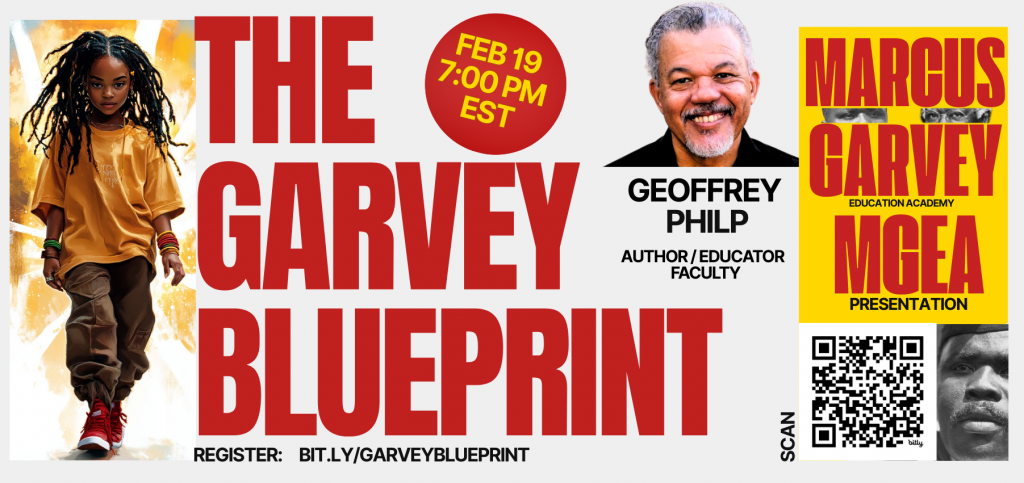
    Geoffrey Philp presents The Garvey Blueprint at the Marcus Garvey Education Academy MGEA February 19 2026 7 PM EST event flyer
    Geoffrey Philp presents The Garvey Blueprint at the Marcus Garvey Education Academy (MGEA), February 19, 2026, 7:00 PM EST. Register at bit.ly/garveyblueprint.

    I grew up in Kingston, Jamaica. Marcus Garvey was everywhere and nowhere. His name was on buildings. His face was on the currency. But his ideas were absent from the classroom.

    That absence shaped everything I have done since.

    For thirty years, I studied Garvey’s writings. I spent six years teaching middle school English, and then I taught college for twenty-seven years. And across all that time, one question kept returning: Why do our children learn about Garvey as a portrait on a wall, never as a thinker whose methods they can use?

    The Garvey Blueprint is my answer.

    On Thursday, February 19, at 7:00 PM EST, I will be presenting The Garvey Blueprint at the Marcus Garvey Education Academy. The presentation is open to educators, parents, school leaders, and anyone who believes that Black children deserve a curriculum built from inside their own intellectual tradition.

    The Garvey Blueprint: A Conversation with the Marcus Garvey Education Academy

    February 19, 2026 | 7:00 PM EST

    Register: bit.ly/garveyblueprint

    Direct Zoom Link: https://us06web.zoom.us/j/4045329958

    What Is The Garvey Blueprint?

    The Garvey Blueprint is a three-year Pan-African literacy curriculum for grades 6 through 8. It uses English Language Arts as the medium through which students encounter the intellectual, political, and cultural history of Africa and its diaspora.

    Across 39 instructional weeks per year, students study 31 historical figures per grade. Over three years, they encounter 75 unique historical figures and one fictional character. Nine staple figures return every year, studied through a different analytical lens each time. A sixth grader meets Frederick Douglass through the question of clarity. An eighth grader meets Douglass through the systems that criminalized Black literacy. The figure stays the same. The thinking transforms.

    Three pillars govern the curriculum: the Power of the Mind, the Importance of Purpose, and the Strength of Perseverance. These pillars come directly from Garvey’s educational philosophy. They are structural principles embedded in every quarter, every framing question, and every assessment.

    Why This Curriculum Exists

    Colonial education divided what belonged together. African intellectual history. Caribbean political thought. African American literary tradition. These are chapters of the same story, separated by design. The Garvey Blueprint reconnects them.

    Every instructional week begins with an original historical fiction anchor text. Students enter through story. They meet Harriet Tubman, Arturo Schomburg, Frantz Fanon, Antonio Maceo, Ella Baker, and dozens more as characters in a narrative before analyzing them as strategists and system-builders. The stance toward every figure is operational: What did this person build? What did it cost? Can the method be applied?

    This is what we call Builders and Their Blueprints. Historical figures studied as architects of liberation whose methods transfer to the student’s own condition.

    What I Will Cover on February 19

    The presentation will walk through the curriculum’s architecture. How the three pillars organize instruction across quarters. How the eight developmental stages, drawn from Garvey’s own declarations, form a spine that holds together three years of learning. How the weekly rhythm moves students through four cognitive levels every single week. How the Grit Guardrail Framework ensures that when we study perseverance, we study it alongside the systems that made perseverance necessary.

    I will also address the question that every parent and educator asks first: How does this prepare students for standardized assessments? The answer is direct. The Garvey Blueprint aligns with state ELA standards. Reading, writing, speaking, and listening are embedded in every week. Students write claims with evidence. They build analytical essays. They engage in Socratic discussion. By eighth grade, they defend a capstone portfolio tracing their intellectual development across three years.

    The curriculum does not choose between cultural grounding and academic rigor. It treats them as the same project.

    If you are an educator looking for a curriculum that teaches Black history as a year-round intellectual framework, this presentation is for you.

    Who Should Attend

    If you are a parent searching for something that meets your child where they are and takes them somewhere they have never been, this is for you.

    If you are a school leader considering what a Pan-African ELA curriculum looks like when it is standards-aligned, assessment-ready, and built to last three years, this conversation is where you start.

    Join the Conversation

    Thursday, February 19, 2026

    Time: 7:00 PM EST

    Host: Marcus Garvey Education Academy (MGEA)

    Register: bit.ly/garveyblueprint

    Direct Zoom Link: https://us06web.zoom.us/j/4045329958

    Share this with anyone you think may be interested. The door is open.

    Geoffrey Philp is the founder of The Garvey Classroom LLC and creator of The Garvey Blueprint. He is the author of several books of fiction and poetry, a Silver Musgrave Medal recipient, and a Marcus Garvey Award for Excellence in Education honoree. He has spent twenty-seven years teaching at the college level and six years teaching middle school English.

    Frequently Asked Questions

    What is The Garvey Blueprint curriculum?

    The Garvey Blueprint is a three-year Pan-African literacy curriculum for grades 6 through 8. It uses original historical fiction anchor texts to teach 75 unique historical figures across three years, organized around three pillars drawn from Marcus Garvey’s educational philosophy: the Power of the Mind, the Importance of Purpose, and the Strength of Perseverance.

    Who created The Garvey Blueprint?

    Geoffrey Philp, a Jamaican-born author and educator with twenty-seven years of college teaching experience, six years as a middle school English teacher, and two decades of Marcus Garvey scholarship, created The Garvey Blueprint through The Garvey Classroom LLC.

    Is the Garvey Blueprint aligned with state standards?

    Yes. The Garvey Blueprint aligns with state ELA standards, including the New York State Next Generation English Language Arts Learning Standards. Reading, writing, speaking, and listening are embedded in every instructional week.

    What grades does The Garvey Blueprint serve?

    The curriculum serves grades 6 through 8 across a three-year developmental sequence. Each grade has its own central question and analytical lens, with nine staple figures returning each year at increasing levels of cognitive demand.

    How is The Garvey Blueprint different from other culturally responsive curricula?

    The Garvey Blueprint is story-driven, meaning every instructional week is built around an original historical fiction anchor text. It studies historical figures as strategists and system-builders whose methods are transferable, rather than as inspirational symbols. Social-emotional learning is embedded in the academic work, with no standalone SEL lessons.

    What is the Marcus Garvey Education Academy (MGEA) presentation?

    On February 19, 2026, at 7:00 PM EST, Geoffrey Philp will present The Garvey Blueprint at the Marcus Garvey Education Academy. The virtual presentation is open to educators, parents, and school leaders.

    Register at bit.ly/garveyblueprint.

  • Liberation Library: Course Video Playlist & Reflection Guide

    Liberation Library: Course Video Playlist & Reflection Guide

    Our children inherit more than names and faces. They inherit stories—some told proudly, others buried under the weight of colonial lies. Too often, history textbooks shrink Africa to a footnote, skip over Garvey’s thunder, and flatten the voices of women, rebels, and dreamers.

    The Liberation Library is here to change that. It is not a playlist. It is a map of resistance, purpose, and liberation across centuries. Each film is a spark. Each voice pushes back against forgetting.

    African Resistance and History

    Pan-Africanism and Black Nationalism

    Key Leaders and Thinkers

    Cultural Icons

    By pairing each module with living voices, students experience Garvey’s blueprint as practice: rooted identity, clear purpose, steady perseverance, and collective liberation. Garvey said, ‘We are going to emancipate ourselves from mental slavery, because whilst others might free the body, none but ourselves can free the mind.’ Each film is a mirror for that work.

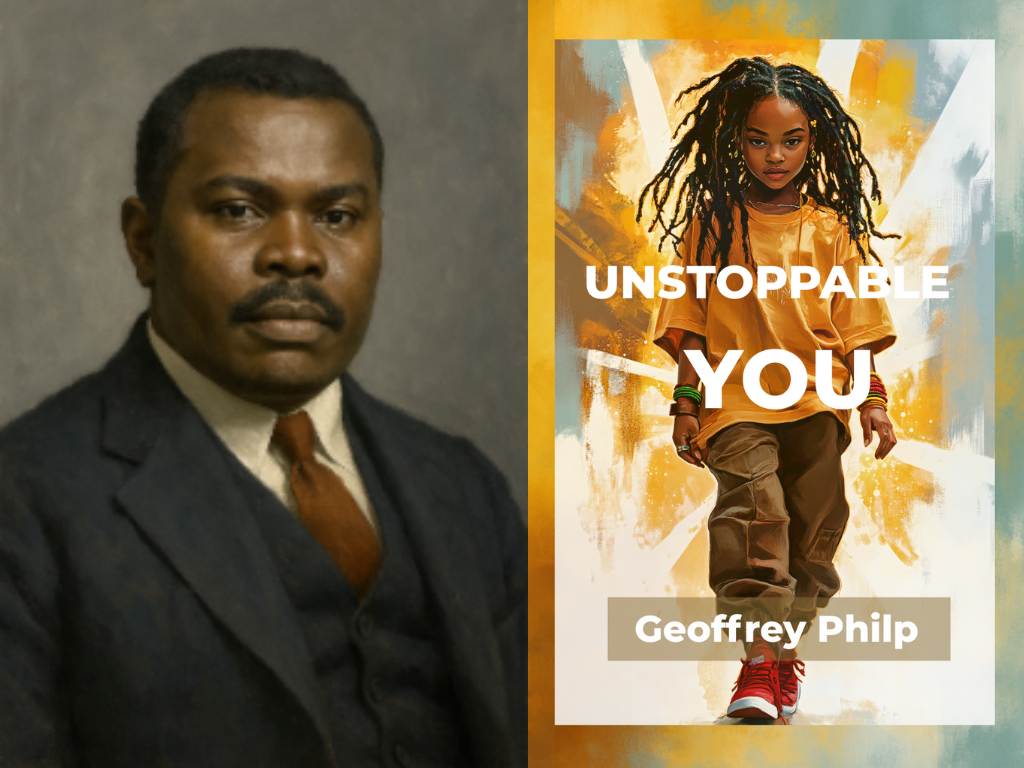
  • Marcus Garvey’s Birthday and the Launch of Unstoppable You

    Marcus Garvey’s Birthday and the Launch of Unstoppable You

    The frangipani reached full bloom this year outside my window, their sweet, stubborn scent drifting in like memory. This flower didn’t originate here. It was carried across oceans by empire, moved, renamed, and replanted like so much else in the wake of conquest. And yet, here it is, thriving in unfamiliar soil. That’s the story of the diaspora. Not just survival, but persistence. Not just memory, but meaning.

    As we approach Garvey’s birthday and the launch of Unstoppable You, I’m reminded that timing isn’t about dates but about readiness. Some works arrive because the ancestors won’t let them wait any longer.

    Today marks Marcus Garvey’s 138th birthday. It also marks the launch of Unstoppable You: 50 Quotes by Marcus Garvey to Inspire Greatness. Seven months after President Biden’s historic posthumous pardon finally cleared Garvey’s name, we witness vindication. The timing speaks to something deeper than coincidence. It signals that Garvey’s message of mental liberation has never been more urgent.

    How Did Marcus Garvey Influence Education and Mental Freedom?

    When I taught writing at Miami Dade College, I watched students discover our heroes for the first time. Before the class started, I asked them to name five Black leaders; they gave me the expected names: King, Parks, Obama. Then they stopped. The conversation ended. They didn’t know about Katherine Johnson’s calculations that launched humans into space. They’d never heard of Louise Bennett-Coverley, who elevated Patwa to literary art. They stared blankly when I mentioned Wangari Maathai’s environmental activism in Kenya.

    This ignorance about our history is what Garvey predicted a century ago. “The greatest weapon used against the Negro is disorganization,” he wrote. Mental disorganization. Historical amnesia. The systematic erasure of our excellence.

    Garvey understood that freedom begins in the mind. He established schools through the Universal Negro Improvement Association. He created the Negro World newspaper, which reached 50,000 readers across continents before colonial powers banned it. He knew that liberated bodies without liberated minds remain enslaved.

    Unstoppable You builds directly on this foundation. The book features 50 Black heroes paired with verified Garvey quotes. Each profile demonstrates mental clarity, purposeful living, and perseverance. Students encounter Frederick Douglass not as a distant historical figure but as a self-taught intellectual who proved that literacy equals liberation.

    Why Did Marcus Garvey Lose Influence in His Lifetime?

    This question haunts many who study Garvey’s legacy. The simple answer: systematic downpression. J. Edgar Hoover’s Bureau of Investigation targeted him as a “notorious negro agitator.” They fabricated mail fraud charges to destroy his Black Star Line shipping company. They imprisoned him, then deported him.

    The deeper answer reveals why his influence matters today. Garvey lost institutional power because he threatened the established order. He preached economic independence when the system required Black dependence. He celebrated African heritage when society demanded assimilation. He built international solidarity when nationalism demanded isolation.

    His persecution validates his message. When the powerful work this hard to silence someone, pay attention to what they’re saying.

    The January 2025 pardon acknowledges what we always knew. The charges were fabricated. The trial was rigged. The conviction was political persecution disguised as justice.

    What Was Marcus Garvey’s Impact on Modern Civil Rights Movements?

    Walk through Harlem today, and you’ll see Marcus Garvey Park. Twenty acres dedicated to a man whose ideas echo through every subsequent liberation movement. Malcolm X’s parents were devoted Garveyites. Martin Luther King Jr. called Garvey “the first man on a mass scale to give millions of Negroes a sense of dignity and destiny.” Nelson Mandela drew inspiration from Garvey’s Pan-African vision.

    The red, black, and green flag that Garvey created now represents Black liberation worldwide. Bob Marley transformed Garvey’s words about mental slavery into “Redemption Song.” The Rastafari movement considers him a prophet.

    His most profound impact lives in education. Carter G. Woodson’s Negro History Week, which became Black History Month, grew from Garvey’s insistence that we teach our own history. The concept of Black Studies programs traces back to UNIA schools that centered African achievement.

    Unstoppable You continues this educational mission. Instead of confining Black excellence to February, the book makes it a year-round reality. Students learn about Ida B. Wells’ investigative journalism, exposing lynching. They discover Neil deGrasse Tyson’s astrophysics research. They see themselves in heroes from across the diaspora.

    How Does Garvey’s Philosophy Apply to Modern Educational Challenges?

    Current attacks on Black history education would not surprise Marcus Garvey. He faced similar censorship. Colonial governments banned his newspaper across Africa. American authorities suppressed his speeches. Yet his message survived.

    “We are going to emancipate ourselves from mental slavery, for though others may free the body, none but ourselves can free the mind,” he declared in 1937. These words feel urgent today as book bans multiply and African American Studies courses face restrictions.

    Garvey offered practical solutions. Create independent institutions. Build economic power. Teach authentic history. Center cultural pride alongside academic excellence.

    Unstoppable You applies these principles to contemporary classrooms. The book works in formal schools, homeschool environments, and community programs. Each hero profile includes actionable insights that students implement immediately. They don’t just read about excellence, they internalize it.

    The book treats young people as intellectuals capable of complex thinking. No simplified biographies or sanitized narratives. These heroes faced real struggles and achieved real victories through specific strategies that students master today.

    Why Does Marcus Garvey’s Vision Matter in 2025?

    Seven months ago, President Biden’s pardon closed a century-long injustice. Congressional Black Caucus members had pushed for this recognition, understanding that historical wrongs demand official acknowledgment. The pardon validates Garvey’s teachings and their contemporary relevance.

    We live in an era where young Black minds face systematic miseducation. Schools teach us to see ourselves as victims rather than heirs to greatness. Media representation focuses on trauma rather than triumph. Academic institutions exclude African contributions to world civilization.

    Garvey’s vision offers an alternative. He taught pride without arrogance, independence without isolation, and excellence without apology. His educational philosophy produces confident, capable, and culturally grounded young people.

    Unstoppable You embodies this vision. The book introduces heroes like Zora Neale Hurston, whose anthropological work preserved African American culture. Students meet Haile Selassie I, whose resistance to the Italian invasion inspired global liberation movements. They discover contemporary figures like Ebony G. Patterson, whose art challenges Caribbean stereotypes.

    Each profile demonstrates that greatness takes multiple forms. Some heroes change the world through science, others through art, and still others through activism. Students find their own strengths reflected in these diverse examples.

    The launch on Garvey’s birthday signals renewal. His pardon removes the stain of false conviction. His educational vision finds new expression through contemporary tools. His message of mental liberation reaches another generation hungry for an authentic connection to their heritage.

    What’s Next?

    As I finish writing this, I return to the frangipani and seeds carried across oceans. Some truths transplant easily. Others require patient cultivation. Garvey planted seeds of mental liberation that generations continue harvesting.

    Today, we plant new seeds. Unstoppable You reaches classrooms where young minds wait for tools to unlock their potential. They deserve heroes who look like them, stories that center them, and education that prepares them not for someone else’s world but for the world they will create.

    Mental slavery ends when mental freedom begins. That freedom starts with knowledge, continues through action, and transforms how young people see themselves and their possibilities. The transformation happens

    Frequently Asked Questions

    How does Unstoppable You differ from other Black history books for students?

    Unstoppable You integrates Marcus Garvey’s educational philosophy with contemporary heroes across the African diaspora. Each profile pairs authentic Garvey quotes with actionable principles that students apply immediately. The book emphasizes mental liberation, treating young people as intellectuals capable of complex thinking rather than passive recipients of simplified narratives.

    Why launch this book on Marcus Garvey’s birthday instead of Black History Month?

    August 17 positions Black excellence as a year-round reality rather than a February celebration. The timing coincides with the school year when curriculum decisions matter most. It also arrives months after Biden’s historic pardon, creating momentum around Garvey’s vindication and educational relevance.

    What age groups benefit from this educational approach?

    The book serves grades 5-12 with content that scales across developmental levels. Elementary students focus on identity and cultural pride, while secondary students engage in philosophical concepts about mental freedom and historical continuity. The visual format and brief profiles accommodate diverse reading abilities while maintaining intellectual depth.

    How do educators integrate Garveyite principles into the existing curriculum?

    The book aligns with academic standards while providing culturally responsive content often missing from traditional textbooks. Teachers use individual profiles for character education, research projects, and cross-curricular connections. The approach supplements the required curriculum with authentic perspectives that engage students historically excluded from mainstream narratives.

    What makes this timing significant for Black education?

    Current restrictions on African American Studies and book bans targeting Black authors create an urgent need for resources that combat educational suppression. The recent pardon validates Garvey’s teachings about the systematic persecution of Black intellectual leadership. This book provides tools for mental liberation precisely when young minds face intensified miseducation about their heritage and potential.

    Works Cited

    Garvey, Marcus. “Speech at Nova Scotia.” Marcus Garvey and Universal Negro Improvement Association Papers, 1 Oct. 1937.

    Hansford, Justin. “Marcus Garvey’s Pardon Is Part of Honoring Black History.” Democracy Now!, 24 Jan. 2025, www.democracynow.org/2025/1/24/marcus_garvey.

    “Marcus Garvey.” American Experience, PBS, 1 Mar. 2019, www.pbs.org/wgbh/americanexperience/features/garvey-biography/.

    “Marcus Garvey and the Universal Negro Improvement Association.” National Humanities Center, nationalhumanitiescenter.org/tserve/twenty/tkeyinfo/garvey.htm

    Marley, Bob. “Redemption Song.” Uprising, Island Records, 1980.

    About Geoffrey Philp: Jamaican-American educator, poet, and Marcus Garvey scholar. Silver Musgrave Medal recipient and 2022 Marcus Garvey Award for Excellence in Education winner. He combines thirty years of teaching experience with culturally responsive educational resources that honor academic rigor and cultural authenticity.

    Order Unstoppable You: Available now for educators, parents, and students ready to begin mental liberation through authentic Black history education that transforms how young people see themselves and their unlimited potential.

    Press Kit for Unstoppable You: Unstoppable You — Press Kit – The Garvey Classroom